Personal Care & Skin
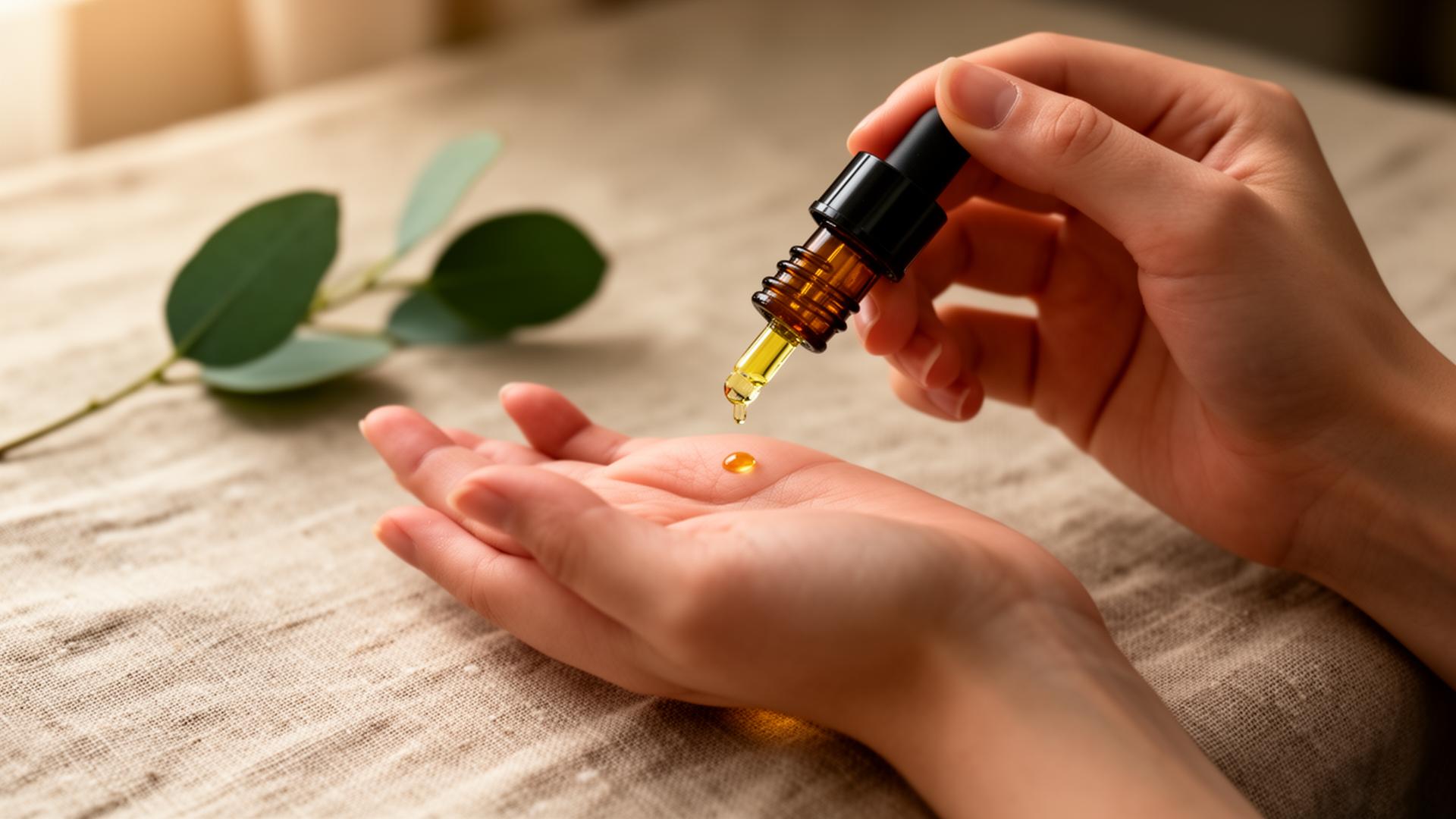
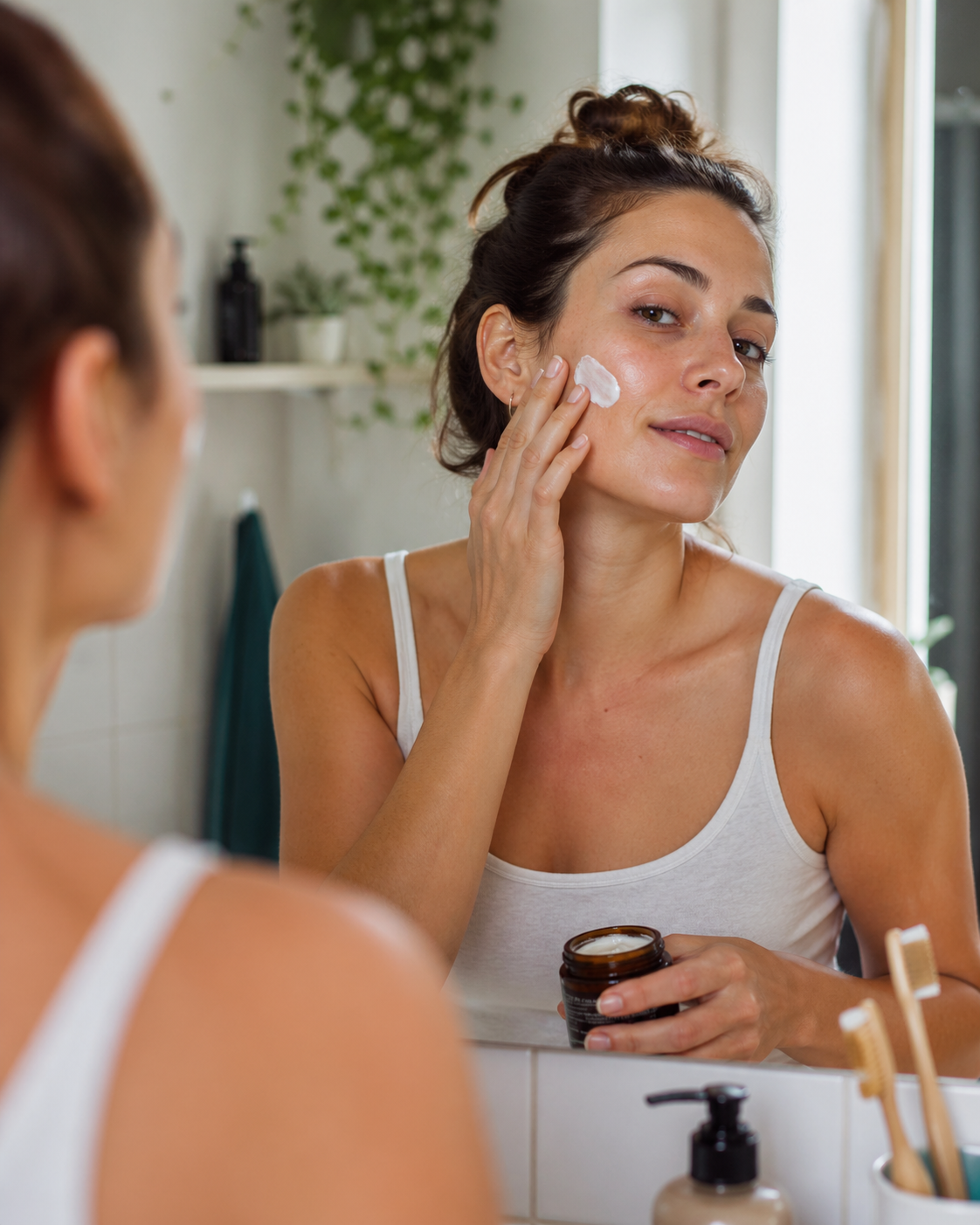
Acne, wounds, fungal concerns, intimate care, shampoos and body care — trusted in everyday personal care in more ways than most people realise.
Not because they've been shown to be unsafe in everyday use, but because of how Tea Tree Oil is being assessed by regulators - with spearmint oil set to follow.
This decision will affect millions of people and natural products worldwide.
Tea Tree Oil is one of nature’s most well-studied and effective essential oils, used by millions of people for decades.
Yet, it is currently being considered for a severe classification in the European Union — based on laboratory studies that don't reflect how people use it in everyday life.
These studies involved force-feeding animals extreme amounts of the oil directly into the stomach, daily, for weeks or months at a time — conditions that bear no resemblance to how any person actually encounters Tea Tree Oil products.
Many scientists believe that at those extreme levels, the studies tell us more about the effects of extreme exposure than they do about Tea Tree Oil itself.
This is a world away from applying a face wash, treating a skin irritation, or adding a few drops to a diffuser.
If this classification goes ahead, Tea Tree Oil will be restricted or removed from most of the natural products people love to use.
And decisions made in the EU have a way of reaching far beyond Europe. Impacting natural product availability world-wide.
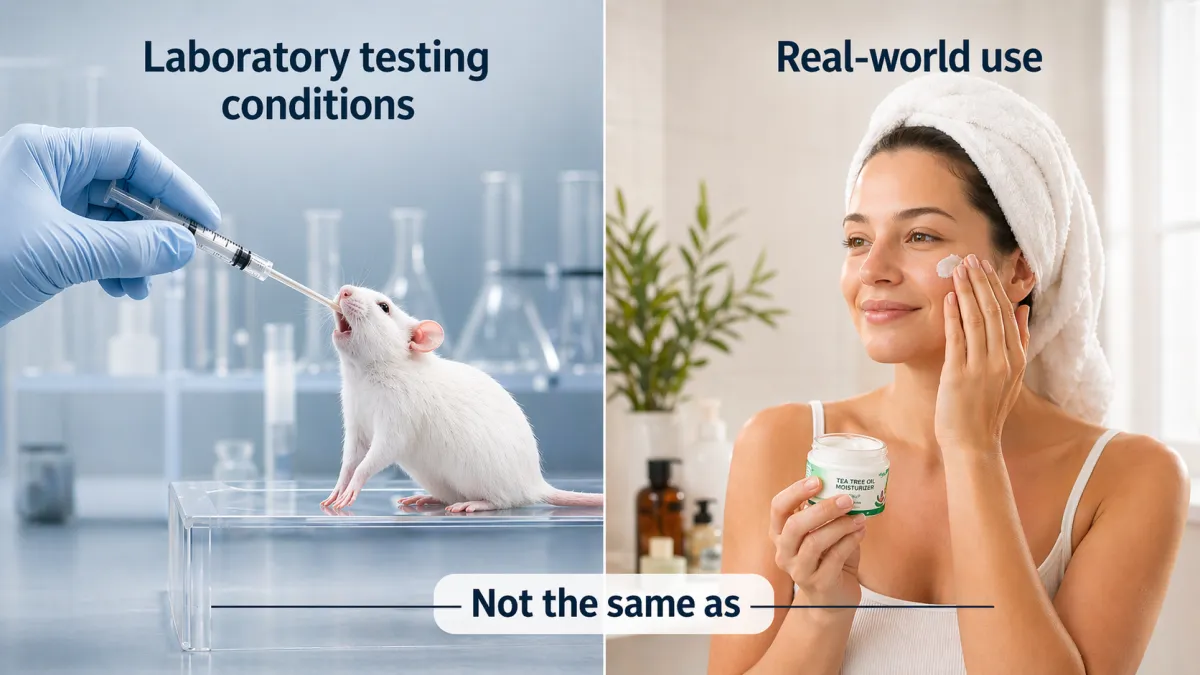
Laboratory conditions vs. everyday use — two very different worlds
A decision this serious deserves the best possible science.
Tea Tree Oil has a long history of safe use. Millions of people rely on it. It’s the only thing that works for some people. The industry behind it supports farmers, small businesses, and communities around the world.
Because the stakes are so high, the evidence used to make this decision must be as clear and complete as possible.
Where genuine scientific questions remain, those questions should be answered before decisions are finalised.
That is not a criticism of the process. It is what good science requires.
Water is essential for life.
But drinking too much too quickly can be dangerous.
We do not ban water because of that. Safety depends on how something is used.
Hazard does not always reflect real-world risk.
Acne, wounds, fungal concerns, intimate care, shampoos and body care — trusted in everyday personal care in more ways than most people realise.

Cleaning, laundry, deodorising — a natural alternative to synthetic chemical products used in homes every day.

Used in hand washes, soaps, diffusers and everyday routines — valued for its natural antimicrobial properties.

The candle maker, the skincare brand, the essential oil supplier, the farmer — businesses and growers whose livelihoods depend on continued access.
For many people, Tea Tree Oil is not optional. It is part of how they manage everyday health and wellbeing.

From persistent dandruff and scalp concerns to recurring lice outbreaks, parents often describe trying product after product before finding options that finally worked for their children. For some, Tea Tree Oil based products have become part of how they manage these issues at home.
“My daughter (13) often struggles with an itchy scalp, generally dry scalp, and dandruff. We've tried various shampoos, but none provided lasting relief. This [Tea Tree] shampoo is different. She no longer has any problems.”
Parent, Europe
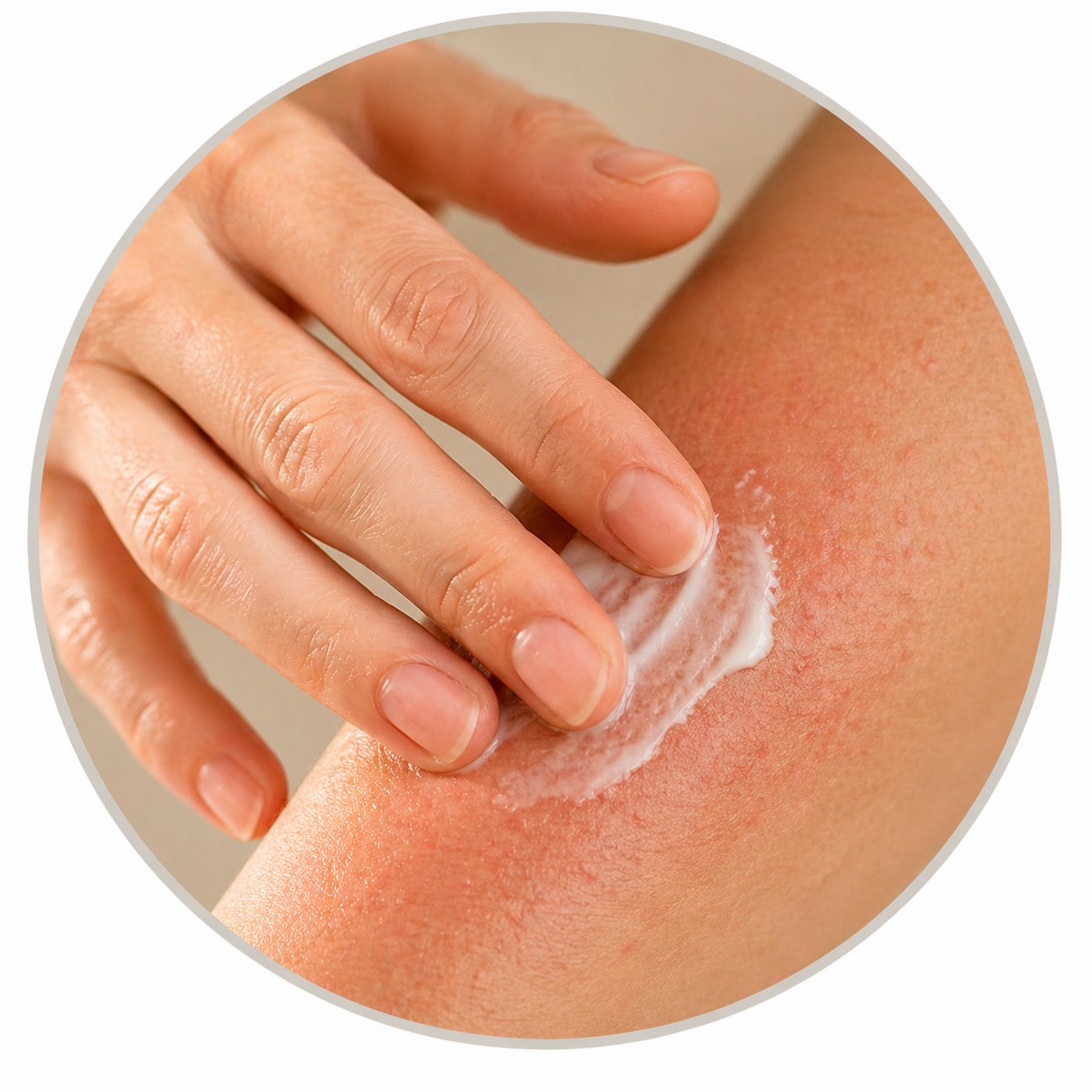
For people living with eczema, psoriasis, dermatitis and similar skin conditions, finding products that help can mean years of trial and error. Many describe testing countless options before discovering Tea Tree Oil based products that helped them manage day to day.
“My skin thanks you after many years of struggle and suffering. It's wonderful to no longer suffer — no more itching, cracking, or burning.”
Lichen Sclerosus sufferer, Europe

Wheelchair users often face persistent skin breakdown, pressure-related sores and chafing that many conventional products struggle to resolve. For some, Tea Tree Oil based products have become one of the few options that genuinely helps manage these issues day to day.
“After a week of using the [Tea Tree] soap and ointment, the blisters disappeared completely — and no new ones have appeared yet!”
Wheelchair user, Europe
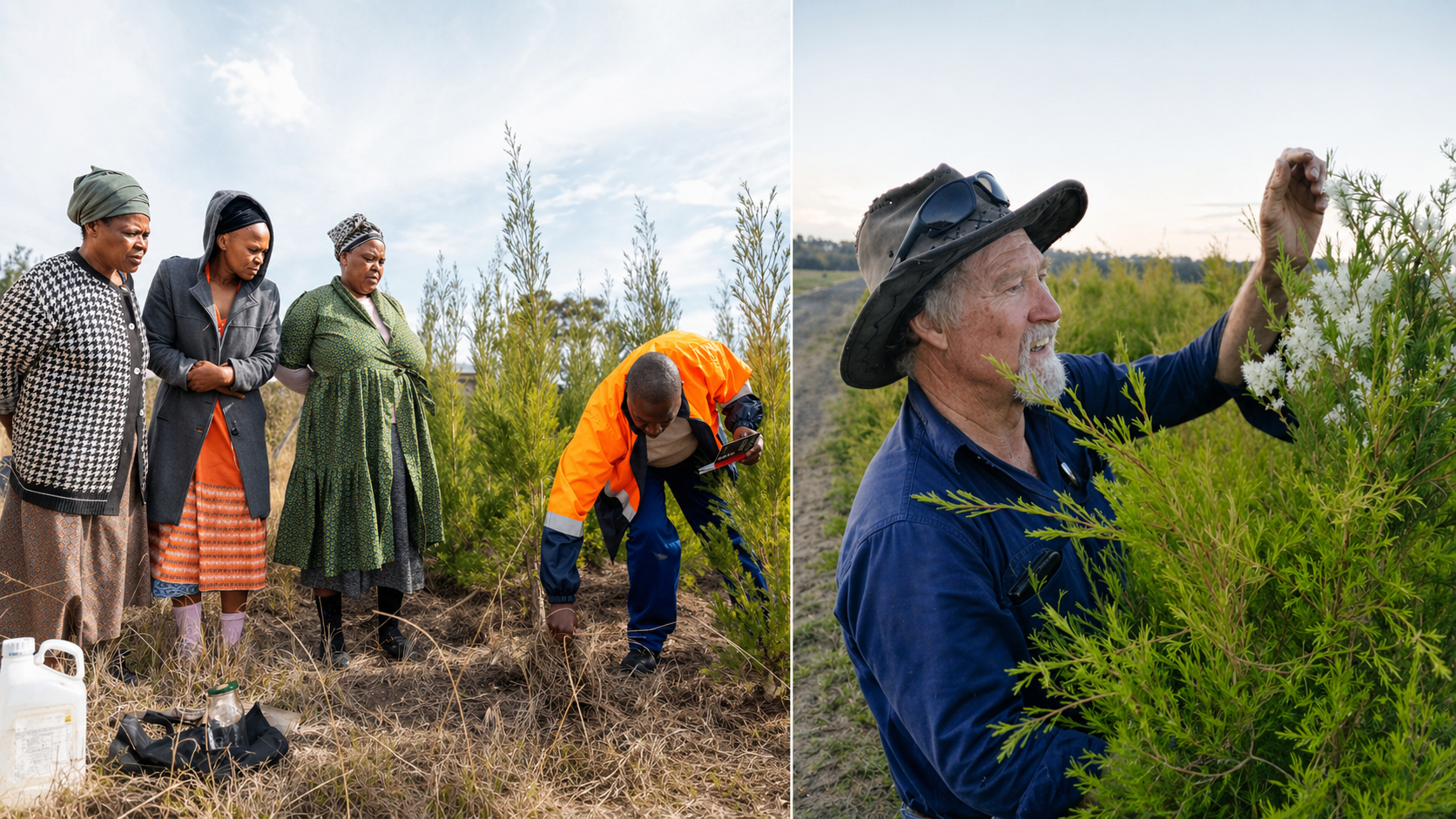
Behind every bottle of Tea Tree Oil is a global network of farmers, growers and rural communities whose livelihoods depend on it.
In Australia, the industry supports approximately 460 direct jobs and 1,100 indirect roles across multi-generational family farms. In Kenya, more than 1,200 smallholder farmers rely on it as a primary income source. In South Africa, cooperative networks support over 2,000 people — for many, Tea Tree Oil is their only source of income.
Regulatory decisions that affect Tea Tree Oil don't stop at the shelf. They travel through the entire supply chain.
If this classification proceeds, the consequences may extend well beyond Tea Tree Oil.
Tea Tree Oil contains more than 100 naturally occurring components. Because the EU has not identified which specific component — or combination of components — caused the effects observed in the studies, other essential oils with overlapping natural chemistry could become vulnerable to the same reasoning, including lavender, peppermint, eucalyptus and citrus oils.
This classification doesn't just threaten Tea Tree Oil — it creates a regulatory blueprint that puts every essential oil with overlapping natural chemistry at risk.
To help ensure decisions reflect real-world use, robust science and proportionate regulation, action is happening on multiple fronts:
This work takes time, resources and broad support to succeed.
That’s why we need your help.
Once finalised, they can shape product availability, regulation and consumer access for years to come — reaching far beyond Europe.
Tea Tree Oil is used by millions of people around the world. But the industry behind it is small — only a limited number of producers and farmers, without the resources of large multinational companies.
This is why broader public support matters.
Adding your name helps show that this issue extends beyond industry — to the people who rely on these products every day. And if you're able to contribute financially, your donation helps support the work needed to protect Tea Tree Oil and other natural products that may be affected.
Add your name
OR


Start with the basics. For deeper scientific and regulatory context, expand the technical layer below.
Tea Tree Oil is a 100% natural essential oil distilled from the leaves of Melaleuca alternifolia, a plant native to Australia.
The leaves of tea tree plants were used by Indigenous Australians long before the modern distilled oil industry began. Today, genuine Tea Tree Oil is defined by the international ISO 4730 standard, which sets out the required composition of authentic Tea Tree Oil.
Tea Tree Oil is valued for its natural cleansing qualities and distinctive fresh aroma, and has been widely studied for its antimicrobial properties, including antibacterial, antifungal and antiviral activity. It has been used commercially for decades in personal care, traditional remedies, first-aid products and household applications.
You may find Tea Tree Oil in bottled essential oil, shampoos, scalp care products, face washes, spot treatments, antiseptic creams, deodorants, oral-care products, household cleaners, agricultural products and professional formulations.
The European Union is considering classifying Tea Tree Oil as a Category 1B reproductive toxicant.
The proposal comes through the EU chemical classification process, including the Risk Assessment Committee, known as RAC, at the European Chemicals Agency.
In simple terms, regulators are considering treating Tea Tree Oil as a substance presumed to have the potential to affect reproduction (specifically male fertility), based only on laboratory animal studies.
This matters because, under Article 15 of the EU Cosmetics Regulation, a Category 1B classification would trigger an automatic ban on Tea Tree Oil in cosmetic products unless a strict exemption, known as a derogation, is granted.
We have currently applied for an exemption, but it is narrow, difficult and uncertain. That is why the campaign is focused on challenging the classification itself — not simply relying on an exemption (allowing only a few products) after the damage is done.
Many experts believe the evidence does not justify treating Tea Tree Oil as a presumed human reproductive toxicant.
No. The proposed classification does not mean normal Tea Tree Oil products have been shown to be unsafe when used as directed.
Tea Tree Oil has been used commercially for more than 50 years, including in Europe, and has a long history of use across personal care, first-aid products, traditional medicines, household products and other applications.
Many of the natural components found in Tea Tree Oil are terpenes that people already encounter through everyday foods. This natural dietary exposure is not new — humans have been exposed to these kinds of plant compounds for hundreds of years.
The EU’s own Scientific Committee on Consumer Safety has concluded that genuine Tea Tree Oil can be used safely in certain cosmetic products at defined concentrations. That is important because it shows that real-world cosmetic use can be assessed differently from the hazard classification process.
The concern in the classification process comes mainly from animal studies where concentrated Tea Tree Oil was given orally at repeated high doses. That is very different from how people normally encounter Tea Tree Oil in everyday products.
No human study has shown reproductive harm from Tea Tree Oil, and we are not aware of any documented real-world pattern of reproductive harm from Tea Tree Oil despite decades of widespread use and exposure.
The campaign is challenging the classification because the evidence does not, in our view, support treating Tea Tree Oil as a presumed human reproductive toxicant.
This is not about rejecting safety regulation. We support strong, science-based safety standards.
The issue is that the proposed classification relies on a number of animal studies that used exposure conditions very different from normal Tea Tree Oil use. In several studies, the animals also showed signs of poor general health, raising questions about whether the findings reflect a specific reproductive effect of Tea Tree Oil, or whether they were influenced by high-dose testing conditions.
We believe regulators have not properly weighed the full evidence. That includes more than 50 years of commercial use, widespread global exposure, the lack of any known human reproductive harm signal, dietary studies, studies on constituents naturally found in Tea Tree Oil, and questions about whether the dosing method itself may have contributed to the animal findings.
The proposed classification was also not beyond dispute, with concerns raised during the process. A classification with such serious consequences should be based on robust, relevant evidence.
The most directly affected products will be cosmetics and personal-care products sold in the European Union.
This will include shampoos, conditioners, hair treatments, scalp products, body washes, soaps, shower gels, face washes, cleansers, moisturisers, lotions, creams, acne and spot treatments, mouthwashes, toothpastes, deodorants, aftershaves and other personal-care products.
But the impact does not stop there. A severe classification will also influence pure bottled Tea Tree Oil, household cleaners, hand washes, air purifiers, aromatherapy products, agricultural products, professional products and other uses.
That is uncertain, and it depends on what final decisions are made.
If the Category 1B classification is adopted then Tea Tree Oil will be presumed as harmful for fertility, and our current understanding is that bottles of the oil, and any products containing it (unless an exemption is granted) will need to be removed from shelves within 18 months.
Bottles of the oil that have been registered as a medicine will be allowed to still be purchased in the EU, but registration is a complex and costly exercise.
Because European regulatory decisions can affect products around the world.
Many brands manufacture products for global markets. If Tea Tree Oil becomes difficult to use in Europe, companies may reformulate products everywhere rather than make one version for Europe and another version for the rest of the world. In fact some companies are already making this shift.
Other regulators across the world look to EU classifications when making their own decisions. Retailers, insurers, online marketplaces and ingredient suppliers can respond to EU decisions even outside Europe.
That means a European classification will affect consumers, farmers, exporters, manufacturers and natural product businesses globally.
It also sets a precedent for how natural complex substances are assessed in future.
Yes. This case could set a precedent for other essential oils and botanical ingredients.
Tea Tree Oil is not a single synthetic chemical. It is a natural complex substance made up of many naturally occurring components.
Many essential oils and plant-derived ingredients are also complex natural substances. If a whole natural oil can be severely restricted based on limited or poorly weighted evidence, other natural ingredients could face similar pressure in the future.
This campaign is therefore about more than Tea Tree Oil. It is about making sure natural products are assessed fairly, with proper attention to human relevance, route of administration and the full weight of evidence.
A severe classification will affect the whole Tea Tree Oil supply chain.
For consumers, it will mean fewer Tea Tree Oil products, less choice, higher costs, reformulated products, or natural ingredients being replaced with alternatives they may not prefer.
For farmers and producers, it could mean reduced demand, lost income and less confidence to keep investing in Tea Tree Oil crops, distillation and processing.
Tea Tree Oil is grown and distilled in countries including Australia, China, South Africa and Kenya. In Australia, the north coast of New South Wales is home to many family-run farms that are central to the global supply.
Behind those farms is a wider network of harvesters, distillers, exporters, agricultural scientists, packagers, formulators, retailers and small businesses. This is not just a technical regulatory issue — it is already having real consequences for real people and regional communities.
Governments are becoming involved because this issue affects trade, agriculture, regional communities, consumer choice and international regulation.
Several countries have already raised concerns through the World Trade Organization process, including Australia, the United States, China, South Africa and Israel. These comments questioned whether the EU is moving too quickly toward such a severe classification and whether the full evidence has been properly considered.
The Australian Government is also supporting the industry’s response. This includes matching funding for eligible research and development work, helping the industry generate stronger scientific evidence on Tea Tree Oil safety.
Government representatives and ministers are also raising the issue directly with European counterparts, including through letters and diplomatic channels. This helps make clear that the proposed classification is not just a technical issue — it has real consequences for trade, farmers, exporters, manufacturers, consumers and regional communities.
The UK Government has also been assessing Tea Tree Oil and does not agree with all parts of the EU’s proposed classification. Importantly, the UK has indicated it is prepared to consider further evidence before reaching a final position.
The campaign is continuing to work with government and industry partners to ensure decision-makers understand the scientific concerns, the trade consequences, and the long history of safe Tea Tree Oil use.
The campaign is asking regulators to properly consider the full evidence before treating Tea Tree Oil as a presumed human reproductive toxicant.
The core arguments are:
This is not about weakening safety standards. It is about making sure a severe classification is based on the full evidence, not a narrow reading of selected laboratory findings.
Adding your name helps show decision-makers that this issue matters to everyday people, not just industry.
Regulators, governments and the media need to understand that this decision could affect consumers, families, farmers, small businesses, exporters and people who value natural products.
Public support helps show that people want safety decisions to be based on sound science, real-world evidence and proportionate regulation.
A larger campaign can attract more attention, strengthen advocacy and help show the scale of public concern.
This is a way to register your support for the campaign and help demonstrate the number of people standing together on this issue.
Donations help fund the scientific, legal and advocacy work needed to challenge the proposed classification.
This campaign is up against a complex and well-resourced regulatory process. Responding properly requires sustained expert work, including toxicology, regulatory submissions, legal advice, government engagement and public communication.
Donations help fund:
The goal is not simply to work around the problem. The goal is to challenge the Category 1B classification itself, because we believe Tea Tree Oil has been incorrectly characterised.
This is also about protecting trust in safety regulation. Serious hazard warnings only work if people believe they are applied fairly and based on the full evidence. If regulators over-label products with long records of safe use, consumers may start ignoring warnings altogether — including warnings that genuinely matter.
Good regulation should protect people from real dangers, not create unnecessary fear around products that have not been shown to harm people in normal use.
ATTIA is the Australian Tea Tree Industry Association, the peak body representing the Australian Tea Tree Oil industry since 1986.
ATTIA was formed to support the Tea Tree Oil industry, including growers, distillers, exporters and other industry participants.
The Save Tea Tree campaign is being managed through ATTIA Ltd. When you donate, your transaction may appear on your card or bank statement as ATTIA, ATTIA Ltd, or a related payment reference.
That is the Save Tea Tree campaign. Donations are being handled through an established industry body connected to the growers and businesses directly affected by the proposed classification.
For questions about donations or receipts, you can contact ATTIA at [email protected].
The technical FAQs below provide more detail on the science, the studies and the EU regulatory process.
They explain the animal studies being relied on, the concerns with oral dosing, the role of real-world human exposure, the SCCS cosmetic safety opinion, Article 15, the derogation process, other evidence raised by the campaign, and how the EU decision could affect different product categories.
The technical section is designed for people who want to look deeper, including journalists, scientists, policymakers, industry members, donors and supporters responding to questions online.
The following information provides additional context on how Tea Tree Oil is assessed and why this issue is complex.
Hazard refers to the potential for something to cause harm under certain conditions.
Risk considers whether harm is likely to occur in real-world use, taking into account how much is used, how often, and how people are actually exposed.
Tea Tree Oil is being assessed based on its potential to cause effects under specific laboratory conditions.
However, these conditions differ from how it is used in everyday products.
Understanding this distinction helps explain why classification outcomes may not reflect real-world use.
Yes. Many substances have hazards under certain conditions.
What matters is how they are used in practice, including dose and exposure conditions.
Safety assessments are based on a range of studies required within regulatory frameworks.
These can include laboratory studies, some of which involve animal models, as part of established regulatory approaches.
These studies are designed to understand how a substance behaves under controlled conditions.
In many regulatory systems, certain types of animal studies have historically been required to assess potential effects.
These requirements are set by regulatory authorities and are not initiated or directed by the Tea Tree Oil industry.
There is increasing global focus on developing alternative methods, but regulatory frameworks often still rely on existing data.
Not always. These studies are designed to explore potential effects under controlled conditions, which can differ significantly from everyday use.
Some regulatory test methods involve repeated ingestion over time to assess potential systemic effects.
Tea Tree Oil is most commonly used in topical products applied to the skin, not ingested.
Differences in biology, metabolism, and exposure conditions mean results do not always directly translate to human use.
They are considered as part of a broader body of evidence.
The effects of a substance depend on how much is used, how often it is used, and how it enters the body.
This is why real-world use is an important part of understanding safety.
No. Classification reflects how a substance behaves under specific testing conditions.
It does not necessarily reflect how a finished product performs when used as intended.
Some regulatory frameworks focus on identifying intrinsic properties of a substance under defined conditions.
This means hazard may be assessed separately from real-world exposure.
In complex cases, there can be differing interpretations of data and how it should be applied.
Regulatory decisions often involve balancing different types of evidence.
Tea Tree Oil contains multiple naturally occurring components rather than a single isolated chemical.
Complex substances can behave differently as a whole compared to individual components studied in isolation.
This can influence how results are interpreted.
Tea Tree Oil has a long history of use in consumer products.
Real-world use provides important context, although it may be considered differently depending on the regulatory framework.
Tea Tree Oil is typically used as part of formulated products, not in isolation.
Product formulation, quality standards, and controlled concentrations all influence how it is used in practice.
Work is ongoing to further understand Tea Tree Oil's potential hazard in the context of real-world use.
This includes scientific research, data review, and engagement with regulatory processes.
Yes. Industry and stakeholders are engaging with relevant processes to help ensure decisions are informed by a balanced view of available evidence.